In this guide
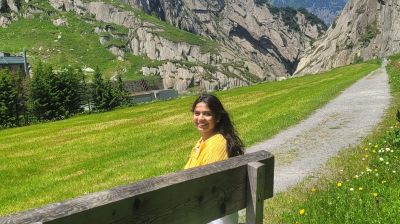
Andermatt is one of those Swiss villages that does not feel real. A flat green valley at 1,447 metres, snow on the mountains on all four sides, a single old church spire, and a quiet pedestrian lane through the middle.
I went there as a day trip from Lucerne with the Swiss Travel Pass. The plan was simple: walk the Schöllenen Gorge, see the Devil’s Bridge, and come back. What I actually got was the strangest folk legend I’ve heard anywhere in Europe — about a devil, a billy-goat, and an old woman with a cross — and a 300-year-old rock tunnel that genuinely scared me.
Pre-Trip Snapshot
- Where: Andermatt, canton Uri, central Switzerland
- Elevation: 1,447 m (Andermatt village); 1,240 m (gorge floor)
- Total walking: 5–6 km / 1.5–2 hours, easy with stairs
- Cost with Swiss Travel Pass: CHF 0 (return trains free, gorge walk free)
- Best for: Travellers using the Swiss Travel Pass who want one quiet, scenic day away from the famous peaks (Pilatus, Titlis, Jungfrau)
- Go in: Mid-June to early October — the gorge path is closed in winter
How to Reach Andermatt
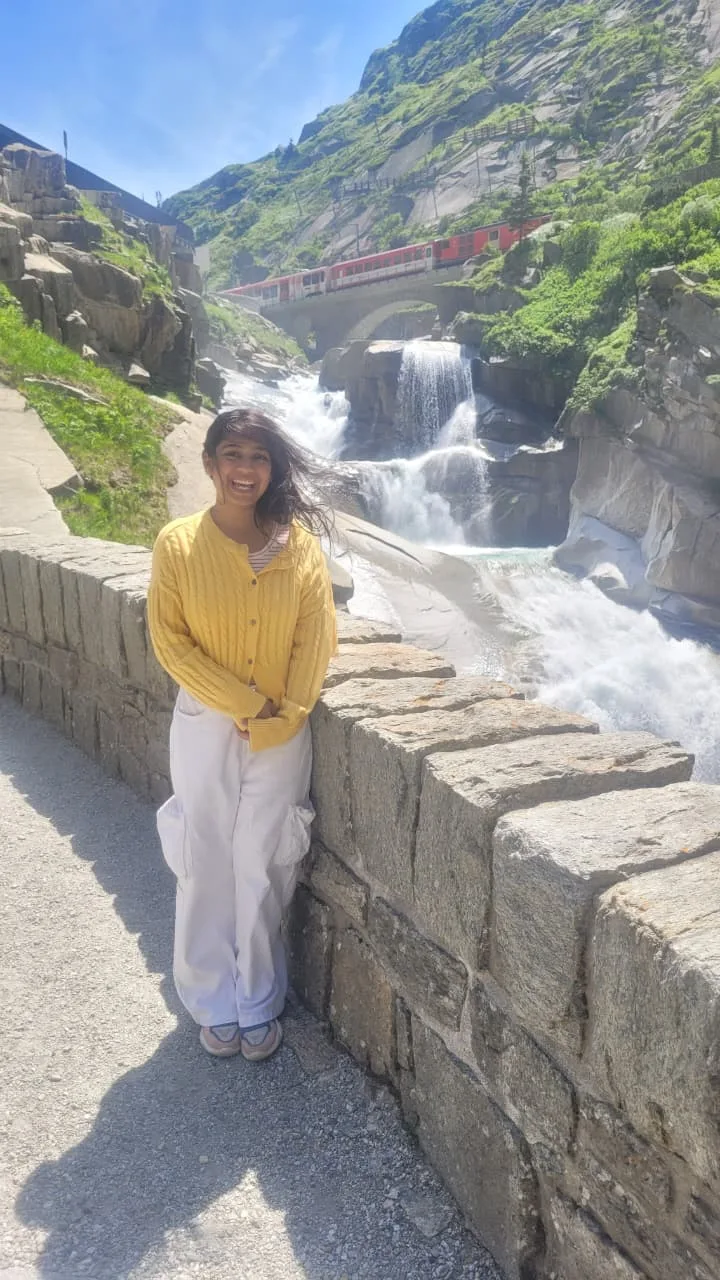
From Lucerne it is an easy ~1 hour 45 minutes, with one change of train at Göschenen. From Zurich it is ~2 hours 15 minutes, hourly all day. The whole ride is free with the Swiss Travel Pass — just turn up at the station and ride.
One tip most travellers miss: Andermatt is a stop on the famous Glacier Express, the panoramic red train between Zermatt and St. Moritz. The Glacier Express needs a paid seat reservation on top of the pass. The regular regional train uses the exact same scenic tracks for free — same mountains, same valley, same gorge views from the window. Take the regional train and save your money for something else.
Linked guide → see What’s 100% Free with the Swiss Travel Pass for every other Swiss train where this same trick works.
Arriving in Andermatt
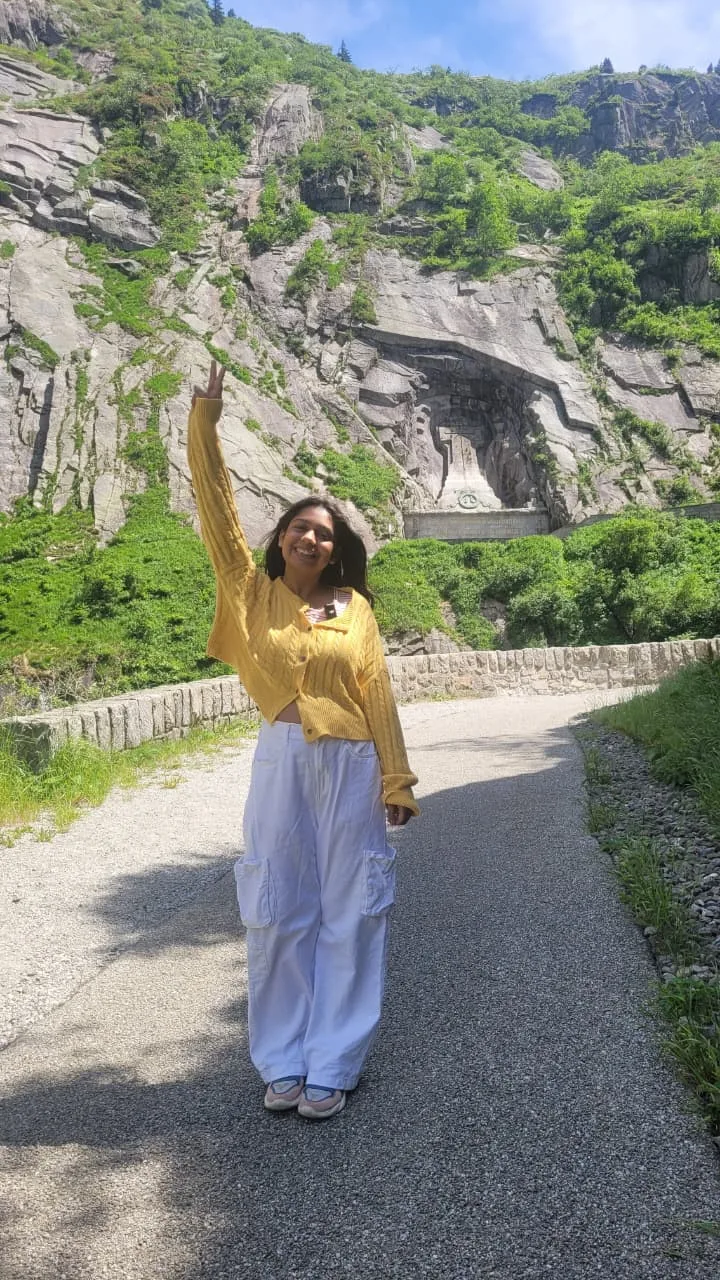
Andermatt station drops you right at the edge of the old village. Walk straight out and you are on the main street — Gotthardstrasse — in less than a minute. The village is tiny: one long pedestrian lane, a couple of supermarkets, a few hotels including the famous Chedi, two churches, a small tourist info booth.
If it is your first time, walk the main street end to end (15 minutes) to get your bearings. Then double back, cross the small bridge over the Reuss river, and you are at the start of the Schöllenenweg — the marked footpath into the gorge.
Walking to the Devil’s Bridge
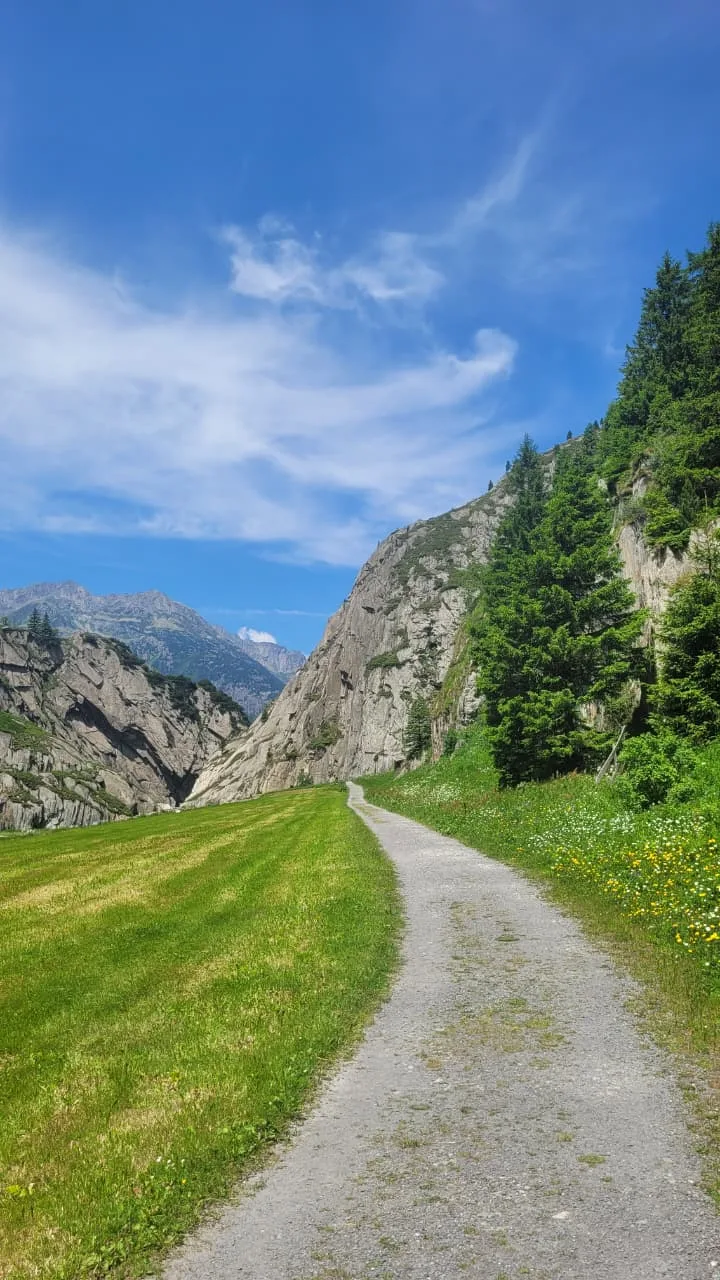
The Schöllenen Gorge is a narrow rocky cut just outside Andermatt, with the Reuss river crashing through the bottom. The path runs along the gorge wall, all the way to the Devil’s Bridge.
- From Andermatt village to the Devil’s Bridge: ~25–30 minutes one way
- Difficulty: Easy to moderate. Paved sections, some stairs, exposed gallery sections with metal railings, and one 60 m tunnel through the rock (more on that below)
- Cost: Free. No ticket, no entry, just follow the “Schöllenenschlucht” signs
Walk out to the Devil’s Bridge, take your photos, and turn back the same way — the round trip is about an hour at an easy pace.
The Legend of the Devil’s Bridge
Here is where Andermatt stops feeling like Switzerland and starts feeling like a folk tale from somewhere much older.
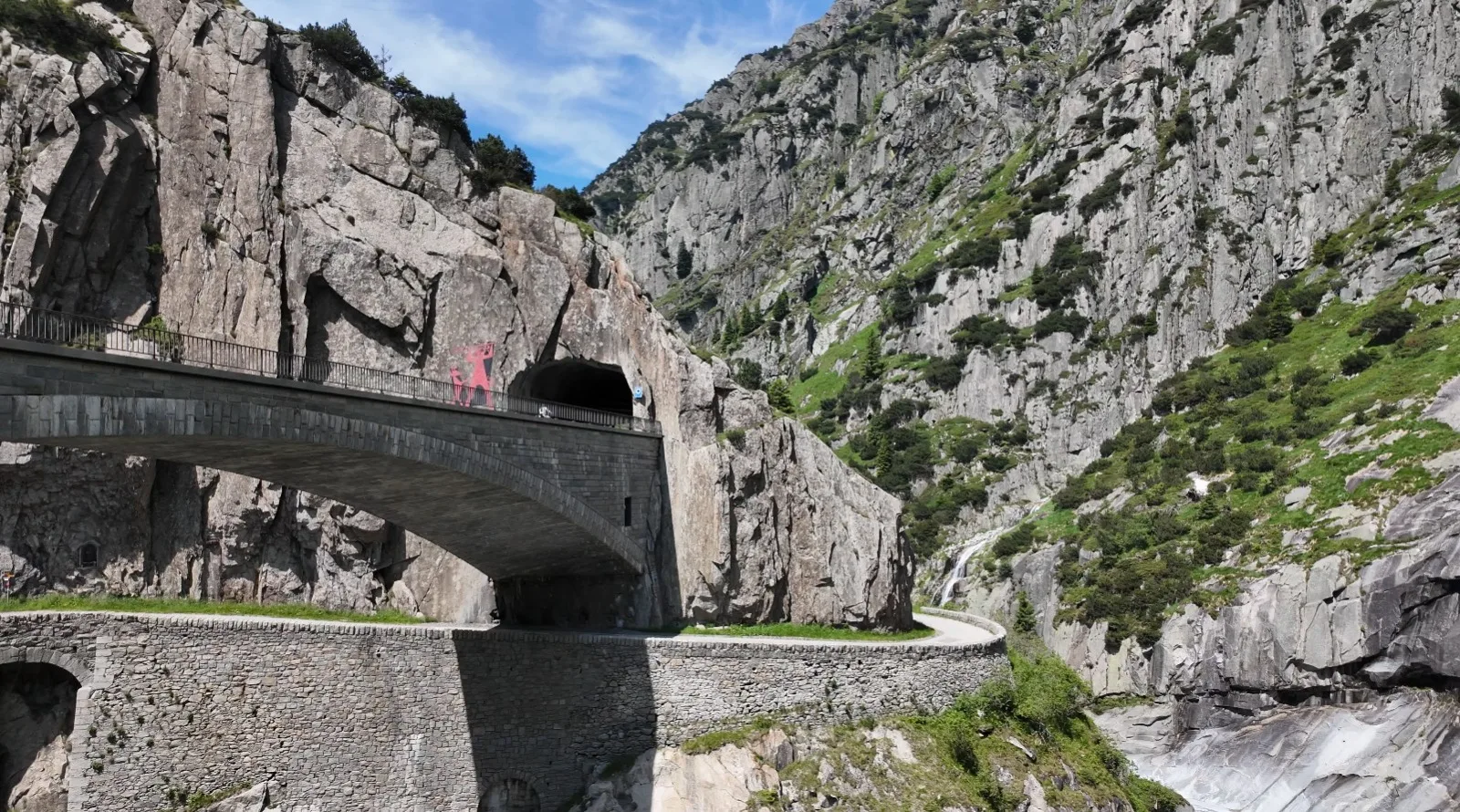
The Devil’s Bridge legend is literally posted on green storyboards next to the bridge, in English, German and Italian, with cartoon cut-outs of a yellow billy-goat on one side and a red devil with a trident on the other. The Uri tourism authority printed the legend exactly the way the local hospital chaplain, Josef Müller, wrote it down between 1906 and 1908. It goes like this.
The villagers of Uri wanted to bridge the wild Reuss river. Nobody knew how. In despair, the chief magistrate shouted into the gorge:
“Let the Devil build a bridge!”
The Devil appeared. He agreed — for one price: the soul of the first being to cross the new bridge. They shook on it.
Three days later, the villagers came back. The bridge was arched perfectly over the gorge. Lucifer was sitting on the other side, waiting.
A wise councillor had an idea. “I have a billy-goat at home that loves a fight. Show him a pair of horns and he charges.” They brought the goat. The moment the goat saw the Devil’s horns, he raced across the bridge straight at him. The villagers cheered: “He’s the first one across — he’s all yours!”
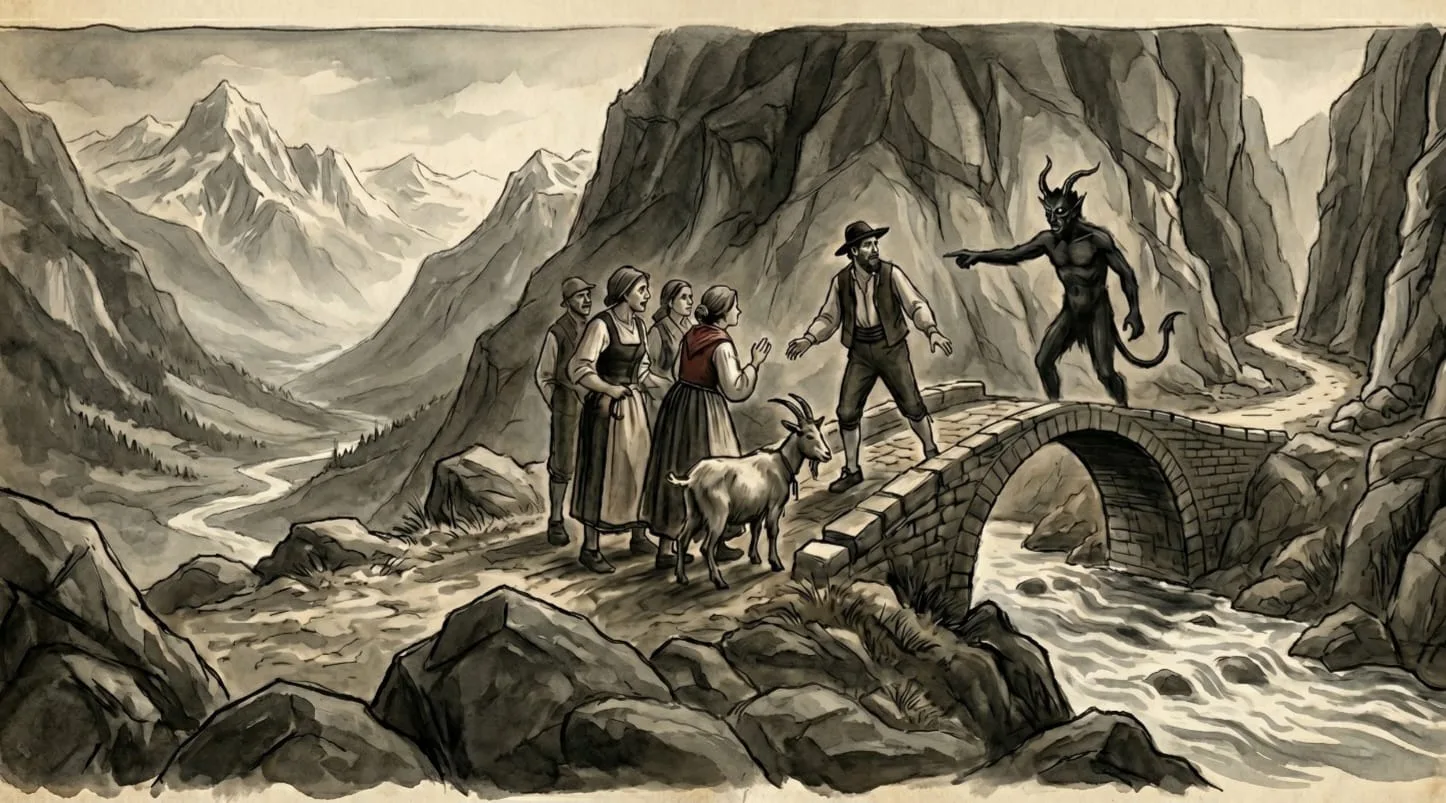
The Devil, fooled, screamed his curse:
“To hell with you Uri people!”
That line is so well-known in Uri that it is literally the headline of the storyboard at the bridge today.
Furious, the Devil stomped down the valley to the Wassner Forest, picked up a rock the size of a house, and started back to smash the bridge. On the way, an old woman stopped him. “My good friend, why such a hurry? You’re gasping. Put down the stone, rest a little.”
He did. The old woman quickly slipped behind the rock, scratched a cross onto it, and walked away. When the Devil went to pick up his rock again, he saw the cross. He left the rock, ran from the gorge, and it is said that the Devil has never returned to the Canton of Uri since.
That rock is still there today, just outside Göschenen. Locals call it the Teufelsstein — the Devil’s Stone. When a new motorway was built in 1971 and the rock was in the way, the canton of Uri spent ~CHF 300,000 to move it 127 metres rather than blast it apart. Modern Swiss engineers, in 1971, choosing to spend that much money rather than destroy a rock that the Devil supposedly dropped. That is how seriously the Uri people take this story.
It is the last thing I expected to find in Switzerland.
The Urnerloch — The Cave Walk That Scared Me
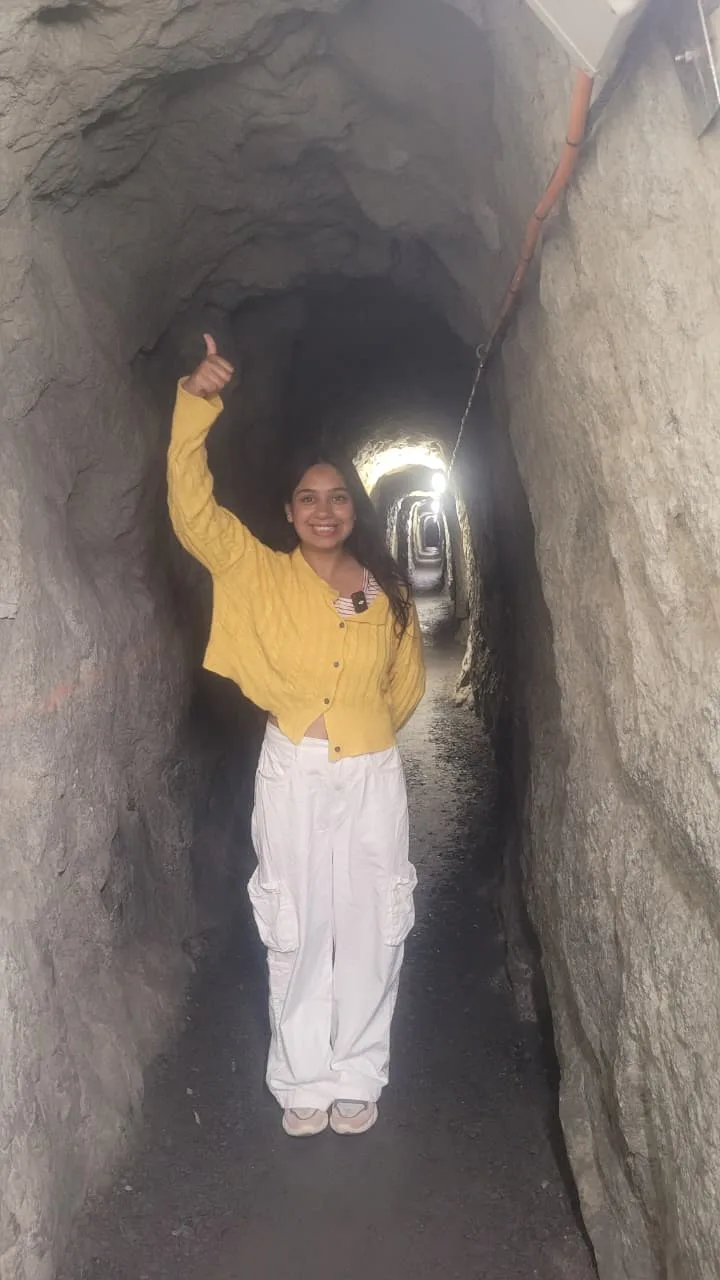
About halfway between Andermatt and the Devil’s Bridge, the path ducks straight into the rock. The walls close in. The daylight dims. You are inside the Urnerloch — the “Uri Hole” — a 60-metre tunnel cut by hand through the cliff in 1707.
I stopped at the entrance. The tunnel opening looked like a black mouth in the rock — no light visible in the middle, just darkness. I have always been a little afraid of dark, tight spaces. I genuinely could not make myself walk in. I turned around.
Halfway back to the village, I felt foolish — I had come all the way from Lucerne for this. So I turned around again, walked back to the Urnerloch, and forced myself in.
It is paved and dimly lit. It takes about 90 seconds to walk through. The tunnel ends right above the Devil’s Bridge — the best viewpoint of the whole gorge.
Walking back through it the second time, I was not scared at all.
If you are nervous: wait for a small group to walk through first and go with them. Half the time you will see families with kids going through laughing.
How This Fits Into a Longer Switzerland Trip
- If you are doing my 7-Day Switzerland Itinerary, Andermatt fits perfectly as a side trip from Lucerne, between your bigger mountain days.
- If you are using the Swiss Travel Pass, see What’s 100% Free with the Swiss Travel Pass — Andermatt and the regional trains here are on that free list.
- Don’t forget the Free Pilatus Cap walkthrough — there is a free souvenir cap waiting for you on the Grand Train Tour app when you ride up Pilatus.
- Get the right apps before you fly — see my Best Free Travel Apps for Europe list.
A quiet alpine village, a hand-cut tunnel from 1707, and one of the strangest folk stories in Europe — printed on a wall next to the bridge it explains. All free with the Swiss Travel Pass. Andermatt is worth the day.
Frequently Asked Questions
Is the train to Andermatt free with the Swiss Travel Pass?
How long is the walk from Andermatt to the Devil's Bridge?
What is the legend of the Devil's Bridge?
Is the Urnerloch cave tunnel safe to walk through?
Have a question about this trip?
Got a question I haven't covered in the guide above? Drop it below — I personally read every one and often add the best questions into the FAQ section of this guide.
You'll share your name and email so I can reply. I use them only to answer you — see our Privacy Policy.