In this guide
Malaysia made things much easier for Indian travellers in 2026 — 30 days visa-free with just a free Malaysia Digital Arrival Card (MDAC). Pair that with short flights from most Indian metros and very budget-friendly prices, and Kuala Lumpur becomes one of the easiest international trips you can plan.
Here is the 3-day plan I followed in KL — Petronas Towers, Batu Caves, Bukit Bintang, and a few small things nobody really tells you about. I travelled on public transport for almost everything, ate veg without any trouble, and the whole trip stayed comfortably within budget.
Pre-Trip Checklist
- Visa: Visa-free for Indian passport holders for 30 days. The only step is filling the free MDAC (Malaysia Digital Arrival Card) within 3 days of your flight at https://imigresen-online.imi.gov.my. Carry a screenshot of the confirmation, your return ticket, and proof of where you are staying.
- Currency: Malaysian Ringgit (MYR). Roughly 1 MYR ≈ ₹19 (rates change — check before you go). I exchanged a small amount at the airport and used a forex card for the rest.
- Getting around: KL has a KTM Komuter train, LRT, MRT, and a monorail — they all use the same Touch 'n Go card, which you can buy at any station. Almost every attraction is train-reachable. Hop-on-hop-off buses cover the main sights too if you prefer.
- SIM card: A local tourist SIM (Hotlink, Maxis, or Digi) is around 15 MYR / ₹300 for a data pack. Buy it right at KLIA airport.
- Veg-Friendly food: Easy. KL has a huge South Indian community, dedicated zones like Brickfields (Little India), and Indian-run restaurants in almost every neighbourhood.
Day 1: Petronas Twin Towers & KLCC Aquarium
- Where I stayed: I booked an Airbnb in a 35-floor building right in the city centre. Mid-floor rooms (15-20th floor) give a great skyline view of the city for very reasonable prices.
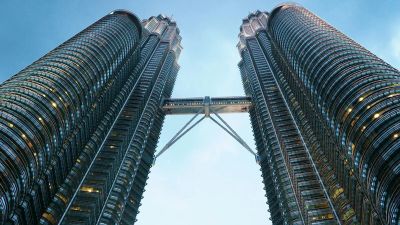
- Petronas Twin Towers: This is the must-photograph stop in KL. The best photo angle is from KLCC Park in front of the towers — the fountain in the foreground makes for a perfect Reel/Insta shot. Go early in the morning for fewer crowds, or after sunset when the towers light up beautifully.
- Aquaria KLCC: Right next to the towers, inside KLCC Mall. The aquarium has touch tanks where you can put your fingers near the fish, plus sharks, jellyfish, sea turtles, and one very confused-looking seal. Ticket is around ₹1,200 per person. Plan around 2 hours here. Honestly the most fun “indoor” thing in KL.
- KLCC Mall: Built into the Twin Towers complex itself. Good place to grab lunch in the food court (lots of veg options) before or after the aquarium.
Tip: The lower-level walkway between the two towers is free — no ticket needed. If you do not want to spend ~600 MYR / ₹11,000 going up to the 86th-floor observation deck, this still gives you the iconic up-close view of the towers.
Day 2: Batu Caves & Bukit Bintang
Morning — Batu Caves
- How to get there: Take the KTM Komuter train directly from KL Sentral to Batu Caves station (~30 minutes, around 2.50 MYR / ₹50). The train is the right choice — the metro requires a transfer and takes longer. The Batu Caves station is a 5-minute walk from the temple.
- The temple: Batu Caves is a 400-million-year-old limestone cave system that houses one of the most popular Hindu temples outside India. The bottom temple is at ground level. The main shrine is inside the caves at the top of 272 brightly painted steps.
- Dress code (important): Shoulders and knees must be covered to enter the main temple. If you arrive in shorts or a short skirt, you can rent a sarong or scarf at the entrance for a small fee.
- Crowd: Tourists from everywhere, but the majority I saw were South Indian — the local Tamil community has a strong presence here, and many of them speak Tamil/Telugu/Malayalam.
- The view of KL from the top of the steps, plus the giant golden Lord Murugan statue at the base, is worth every step. Allow 1.5 to 2 hours.
Afternoon and evening — Bukit Bintang
- How to get there: Take the LRT or monorail to Bukit Bintang station. The famous Jalan Bukit Bintang street is right outside the station.
- What to expect: The single most happening street in KL. Always something going on — street performers, food stalls, live music, photo-shoots. I just walked around for 2-3 hours and the time disappeared. There are also a lot of cute cats around (I had to stop and say hello to a couple of them).
- Food: Indian restaurants, Malay hawker stalls, Chinese, Western, dessert shops. I ate at a South Indian restaurant — banana-leaf thali for around 15 MYR (~₹300).
- Try Turkish ice cream: One of the street vendors makes a whole show of it with the long scoop. Three flavours for around 10 MYR (~₹200) and the taste was genuinely good.
- Shopping & souvenirs: Souvenirs, magnets, and Beryl’s chocolates (the famous Malaysian chocolate brand) are easy to find. Pavilion KL mall is across the road if you want bigger shopping.
- Live music: When I was there, a live concert was happening in the open area and they were singing Hindi songs — KL really does cater to Indian visitors.
Day 3: Genting Highlands Day Trip
Day 3 is for the day trip everyone in KL talks about — Genting Highlands. It sits at 1,800 metres above sea level about 60 km from the city, the weather is cool (around 15–20°C even when KL is sweating), and the cable-car ride up is one of the most photographed things in Malaysia.
- How to get there: Take a bus from Terminal Bersepadu Selatan (TBS) or KL Sentral. Skyway Genting Express runs every 30 minutes, costs ~10 MYR (~₹200) one way, and takes about an hour. You can book the bus online at https://easybook.com a day ahead, especially on weekends.
- Awana SkyWay cable car: This is the headline ride. The 21-minute gondola lift is the longest in Southeast Asia and the views are stunning. Standard ticket ~17.50 MYR (~₹350) round trip; glass-floor cabin ~25 MYR (~₹500). Pick the glass-floor cabin if you can — you can see straight down through the rainforest while you go up.
- Chin Swee Caves Temple: The cable car has a mid-station stop at this beautiful Buddhist temple on the side of the mountain. Free to visit. Allow 30-45 minutes.
- At the top: First World Plaza has indoor shopping, a casino (must be 21+), restaurants, and the Genting SkyWorlds theme park if you have kids or want a full day. Theme park entry is around 200-250 MYR (~₹4,000-5,000) — worth it only if you plan to spend the whole day there.
- Food: Plenty of vegetarian options up at Genting — South Indian, North Indian, Chinese veg, and a few fully-vegetarian places at First World Plaza.
- Heading back: Cable car down → bus to KL → freshen up at your stay → head to KLIA airport. Plan to leave Genting by 4–5 PM if you have an evening flight.
Tip: Wear a light jacket or shawl when going to Genting. Even in May-June (peak Indian summer), it gets genuinely cold up there because of the altitude.
Veg-Friendly Food in Kuala Lumpur
If you eat only vegetarian, KL is one of the easiest international cities in Southeast Asia. The reasons: a huge South Indian community, many Hindu and Jain residents, and a culture of mixed cuisines. The reliable spots:
- Brickfields (Little India) — a 10-minute train ride from KL Sentral. Banana-leaf rice, dosa, idli-sambar, the works. Restaurants like Vishal, Saravana Bhavan KL, and Lotus Restaurant are the popular ones.
- Bukit Bintang Indian restaurants — a few South and North Indian places along Jalan Bukit Bintang and the side streets.
- Mall food courts — KLCC, Pavilion, Mid Valley all have at least one Indian or “Veg-Friendly” stall in the food court.
- Hare Krishna restaurants — Govinda’s in Bangsar is fully vegetarian with thali plates.
Honestly the South Indian food in KL is some of the best I have had outside India.
Getting to and from KLIA Airport
Kuala Lumpur International Airport (KLIA) is about 55 km south of the city. There are three options each way — pick by speed vs cost.
- KLIA Ekspres train (fastest): Direct from KL Sentral to KLIA in 28 minutes, no stops. Around 55 MYR / ₹1,100 one way. Trains run every 15–20 minutes from early morning to late night. Buy at the counter, the kiosk, or pre-book online at https://klia-ekspres.com.
- KLIA Transit train (cheaper): Same line as the Ekspres but stops at 3 intermediate stations. Takes ~35 minutes and costs around 35 MYR / ₹700 one way. Good if you are coming from one of those middle stations.
- Grab cab (door-to-door): Download the Grab app before your trip (it is the Uber of Southeast Asia). Set pickup as your hotel/Airbnb and destination as KLIA Terminal 1 or 2. Fare is usually 70–100 MYR (~₹1,400–₹2,000) depending on time of day and surge. Good if you have a lot of luggage or are travelling as a group of 3-4 (split between you, it works out cheaper than separate train tickets).
Tip: Booking Grab in advance is easy — open the app, tap “Schedule” while booking, and pick a pickup time. Useful if you are heading to the airport at an odd hour (5 AM flights for example) when Grab availability is thinner.
For arrivals: the same three options work in reverse from KLIA Terminal 1/2 to KL city. The KLIA Ekspres counter and the Grab pickup zone are both clearly signposted as you exit baggage claim.
Last-minute souvenir tip: Beryl’s chocolates (Malaysia’s famous chocolate brand) and a fridge magnet are the easy picks. Most KL malls have a Beryl’s outlet, and KLIA also has duty-free Beryl’s at the gates if you forgot earlier.
How Much Does It Cost?
| Round-trip flight from Delhi/Mumbai/Chennai | ₹15,000 – ₹25,000 |
| Airbnb / mid-range hotel (3 nights) | ₹6,000 – ₹12,000 |
| Local transport (3 days) | ₹500 – ₹1,000 |
| Food (3 days, mid-range) | ₹3,000 – ₹4,500 |
| Attractions (Aquaria + Batu Caves + Genting cable car) | ₹2,000 – ₹3,500 |
| Souvenirs / shopping | ₹1,000 – ₹3,000 |
| Estimated total per person | ₹28,000 – ₹48,000 |
Tip: Watch for AirAsia and Batik Air sales — fares from Indian metros to KLIA can drop to ₹12,000 round-trip during off-season, which makes the whole trip extremely affordable.
Watch the Kuala Lumpur Vlog
▶ Watch the full Kuala Lumpur vlog on YouTube →
If you are planning a wider Southeast Asia loop, my 5 Days in Bali and 7-Day Vietnam itinerary cover the other two destinations Indians visit most often in this region.
Frequently Asked Questions
Do Indians need a visa for Malaysia in 2026?
How much does the Aquaria KLCC aquarium ticket cost?
What should I wear to Batu Caves?
Should I take the metro or the train to reach Batu Caves?
Where can I find vegetarian Indian food in Kuala Lumpur?
Is 3 days enough for Kuala Lumpur?
How do I get from KL to Genting Highlands?
Have a question about this trip?
Got a question I haven't covered in the guide above? Drop it below — I personally read every one and often add the best questions into the FAQ section of this guide.
You'll share your name and email so I can reply. I use them only to answer you — see our Privacy Policy.